01 · GAME
HUNL rules and state tree
Cards, streets, blinds, terminal utilities, hand evaluation and an action abstraction from fold to all-in.
A source-verified research stack for CFR subgame solving, ReBeL-style recursive solving, counterfactual value learning, self-play and C++ Monte Carlo components.
Every capability below maps to a visible module. Unsupported claims about OCR, automatic online play, one-click executables or guaranteed performance are intentionally excluded.
Cards, streets, blinds, terminal utilities, hand evaluation and an action abstraction from fold to all-in.
Regret updates, average strategies, reach probabilities, best response, expected value and exploitability utilities.
Build subgames from public states, propagate private-hand beliefs and continue solving after sampled actions.
PyTorch models estimate leaf values and support configurable value and policy learning experiments.
Multiprocess generation, model synchronization, replay buffers, training batches and validation workflows.
A native simulator and Python-binding foundation complement the Python game and learning modules.
The repository separates rules, solving and learning so each stage can be tested or extended independently.
The HUNL engine creates legal public states across preflop, flop, turn and river.
CFR traversals update regret and average policy; value networks can estimate truncated leaves.
Generated counterfactual-value and policy samples flow through replay into PyTorch models.
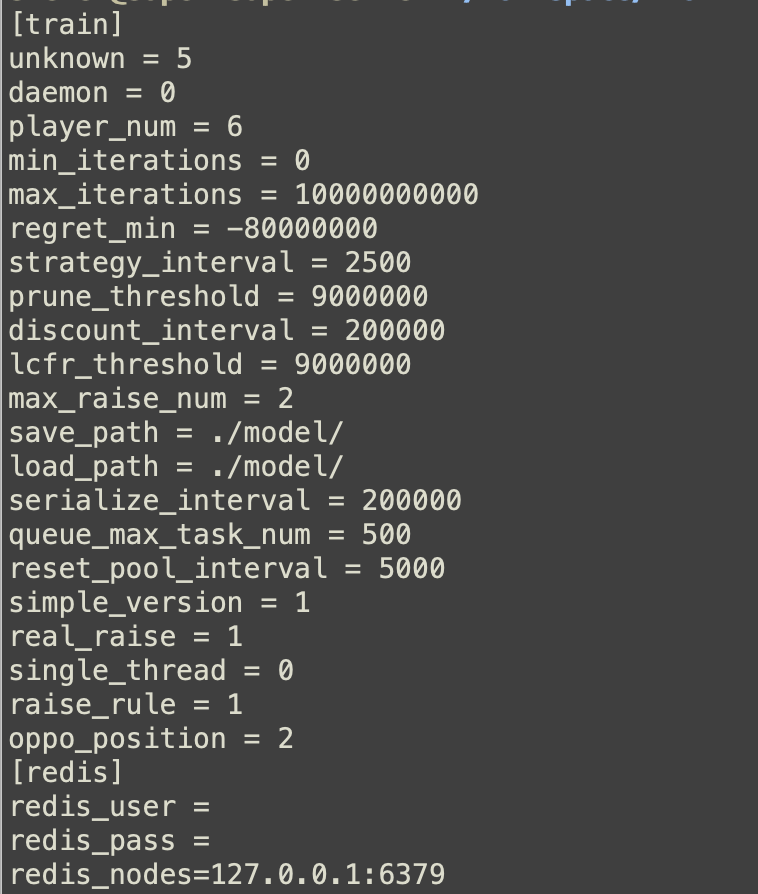
The original repository image shows iterations, regret settings, pruning, model paths and Redis configuration. It is correctly labeled here as a training configuration and terminal view.
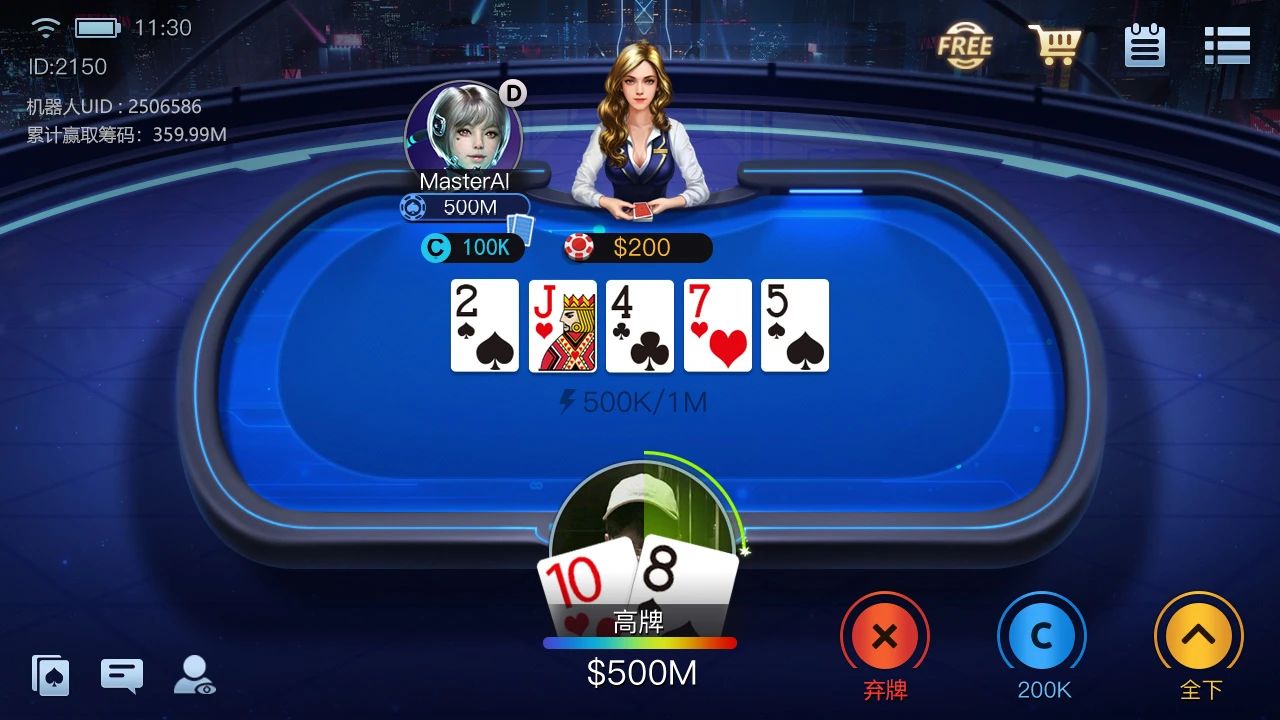
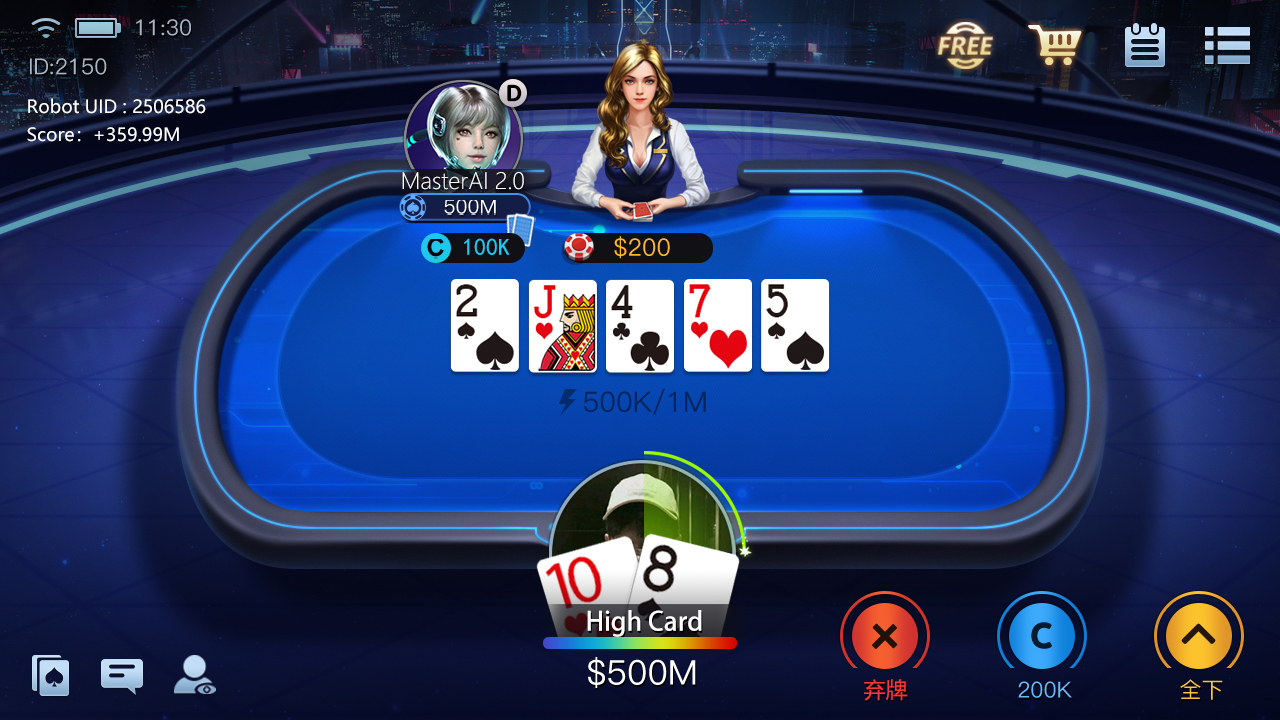
The table image shows a robot seat and poker-table presentation. It does not prove recognition, automation or integration with any third-party service, so this page makes no such claim.
Use Deep Hold'em AI for lawful research, education, offline training and benchmarking. Do not use it for unauthorized real-time assistance, automated online play, rule evasion or unfair play.